
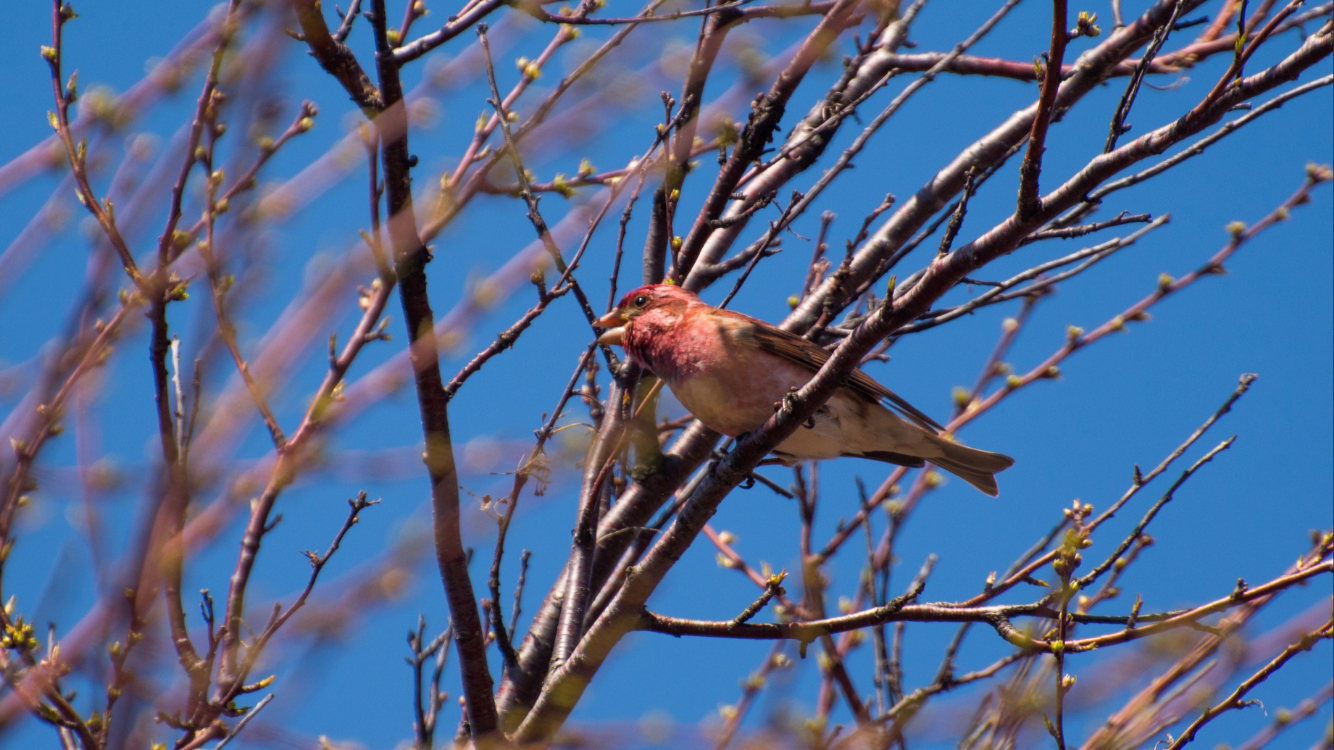
At the end of December 2025, we began receiving reports from a wildlife rehabilitator in Ottawa, ON regarding numerous sick finches suspected to have Mycoplasmosis. The birds were all described as having crusty, inflamed eyes, otherwise known as conjunctivitis. With the help of the rehabilitator, we were able to collect over a dozen finches for testing and subsequently confirm their suspicions of Mycoplasmosis.
Mycoplasmosis is caused by Mycoplasma bacteria, most commonly Mycoplasma gallisepticum in wild birds1. M. gallisepticum was originally known for causing respiratory infections in domestic poultry, upland game birds, and waterfowl 1. In the 1990’s, a new strain of M. gallisepticum emerged in wild songbirds, particularly House Finches1. While initially associated with House Finches, it is now known to infect multiple species of finches and grosbeaks1.
The most common clinical sign of Mycoplasmosis in wild birds are red, swollen eyelids with a clear discharge2. More severe infections may include crust formation, significant swelling of the eyes, and may even result in blindness2. In some cases, you will see discharge flowing from the nares leading to wet and matted feathers around the face 2. Infected birds may also exhibit reduced movement and feeding, weight loss, and ultimately death from starvation, exposure, or predation 2. The initial outbreak in the United States greatly impacted the finch population, and Mycoplasmosis continues to cause population declines of up to 40% during outbreaks 2.
Mycoplasmosis is transmitted through direct contact with eye and nasal discharge from infected birds 2. Luckily, the Mycoplasma bacteria do not survive long outside of the host 2. However, bird feeders and other areas where birds congregate can facilitate transmission and act as key sites of infection 2.
To prevent disease outbreaks, it is best to frequently clean birdbaths and feeders. This should be done every one to two weeks by soaking baths and feeders in a 10% chlorine bleach solution (one part bleach to 9 parts cool water), rinsing them well and letting them fully air dry3. It is important to wear a pair of gloves when cleaning your feeders and to only use those gloves and any other tools (like brushes) for this purpose3. Feeders that prevent birds from standing directly on the seed are recommended, and platform or tray feeders should be avoided3. If seed ever becomes wet, it should be discarded to avoid the growth of mold4. It is also good practice to clean the ground under the feeders, by raking and discarding dropped seed to discourage bacteria growth and pest species3. Finally, monitoring birds in your yard for signs of illness is also important3.
In addition to Mycoplasmosis, there are other feeder-related diseases, such as Salmonellosis that can cause illness in backyard birds (see Bird Feeding Stations and Bird Health). If you see songbirds with crusty eyes, wet or matted feathers around the beak, fluffed up feathers or who appear lethargic, they may be sick. We recommend that you temporarily remove feeders for a minimum of two weeks to reduce congregation and limit disease transmission. If illness persists after feeders are reintroduced, consider taking your feeders down until the beginning of the next season3.
If you find dead songbirds (or any dead wildlife) in your yard, you can contribute to wildlife disease surveillance by contacting the CWHC at 1-866-673-4781 or by submitting an online report at https://cwhc.wildlifesubmissions.org/.
By: Jenna Matsuba, Abby Irwin, & Kaitlyn Young
References
- Heisman, R. (2017, January 11). House finch eye disease: Outbreak, then understanding. Cornell Lab of Ornithology. https://www.allaboutbirds.org/news/house-finch-eye-disease-outbreak-then-understanding/
- Canadian Wildlife Health Cooperative. (n.d.). Avian Mycoplasmosis fact sheet. file:///C:/Users/ccwhc/Downloads/Avian_Mycoplasmosis_Fact_Sheet%20(4).pdf
- Canadian Wildlife Health Cooperative. (n.d.). How you can Reduce the Spread of Diseases Among Backyard Birds. file:///C:/Users/ccwhc/Downloads/backyard_birds_printable2%20(1).pdf
- Birds Canada. (n.d.). Keeping Feeder Birds Healthy. https://www.birdscanada.org/you-can-help/keeping-feeder-birds-healthy