
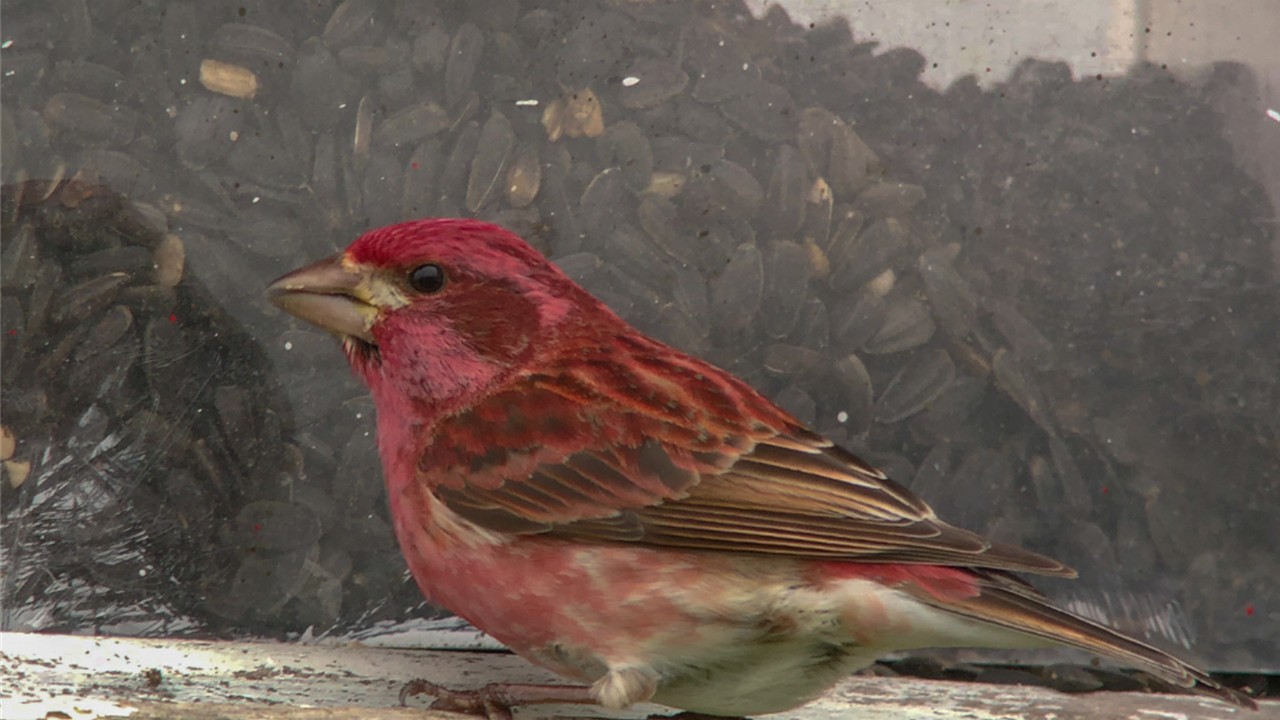
Stéphane Lair, Regional Director for the Canadian Wildlife Health Cooperative (CWHC) – Quebec, was invited to give a presentation on bird feeding stations and the health of wild birds as part of the Côte-Nord Migratory Bird Festival, held in Tadoussac (Québec) last September. The objective of this talk was to present the main diseases that may be observed in birds frequenting feeding stations, to examine the positive and negative effects of feeding wild birds, and to discuss the precautions that can be taken to minimize disease transmission through this practice. What follows is a summary of the key points from this presentation, which was delivered to an audience of passionate birdwatchers.
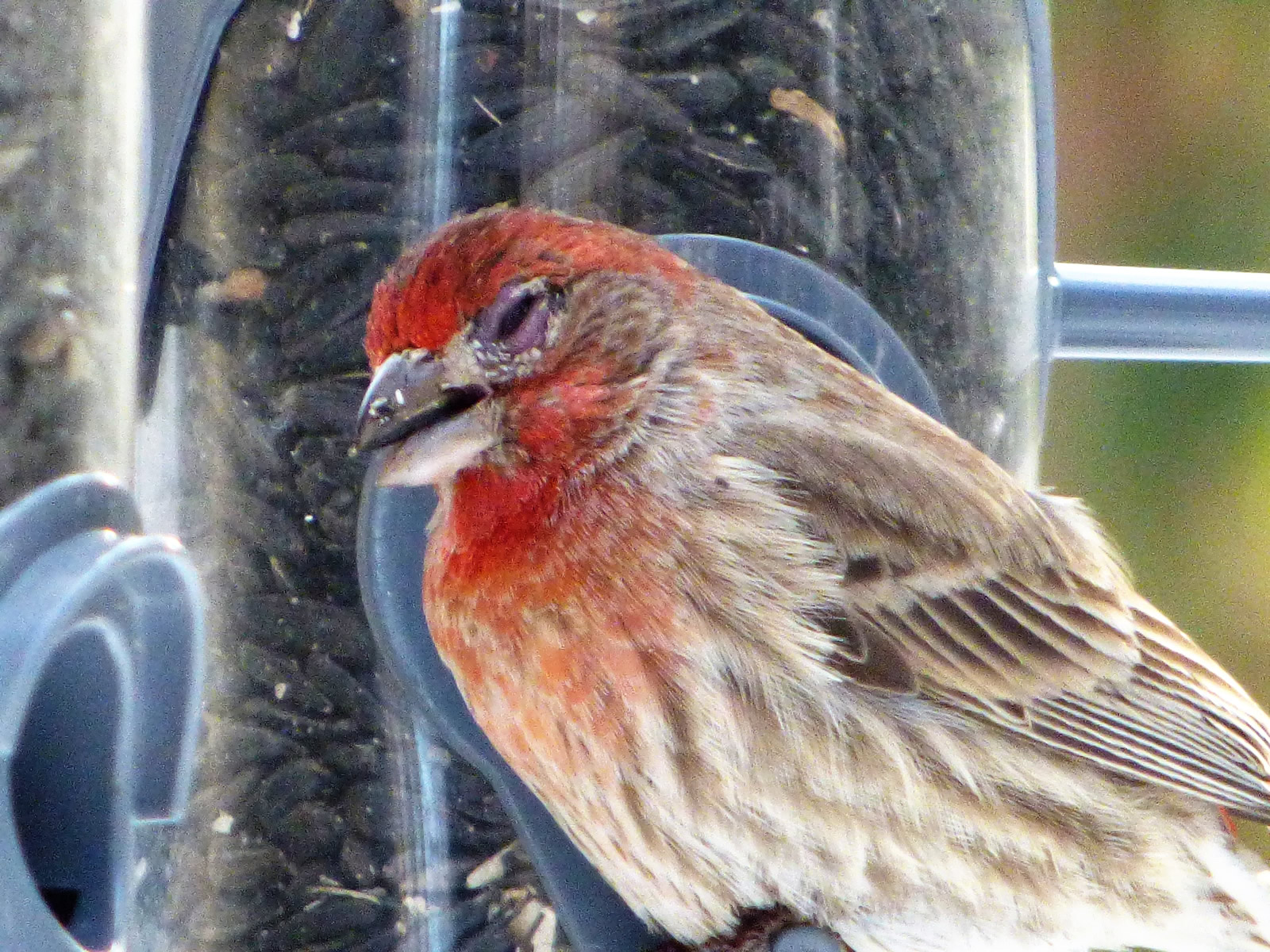
The growth of recreational ornithology and wildlife photography has contributed to documenting diseases affecting birds in natural environments. Although a definitive diagnosis requires laboratory confirmation, the evaluation of photographs submitted by observers can allow for a presumptive diagnosis of certain conditions with characteristic clinical presentations. Among the diseases frequently observed at bird feeders, mycoplasmosis, caused by Mycoplasma gallisepticum, manifests as conjunctivitis/blepharitis (inflammation of the eyes and eyelids) and is most often observed during winter in finches and other fringillids (Photo 1). This bacterial condition, which is regularly observed in Québec, is mainly transmitted through direct contact between birds.
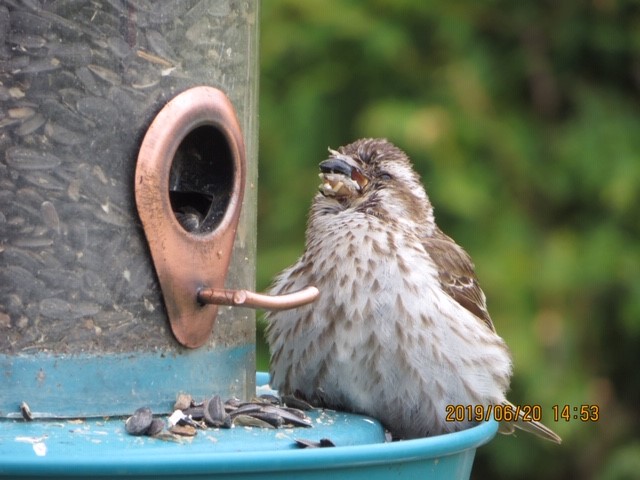
Trichomoniasis, caused by the protozoan Trichomonas gallinae, primarily affects American goldfinches and finches. This parasitic disease causes ulcerative oral lesions, leading to regurgitation and excessive salivation (Photo 2). Trichomoniasis is most commonly observed in late summer, when mild temperatures allow the parasites to survive in wet, contaminated seeds, thereby facilitating transmission between birds.
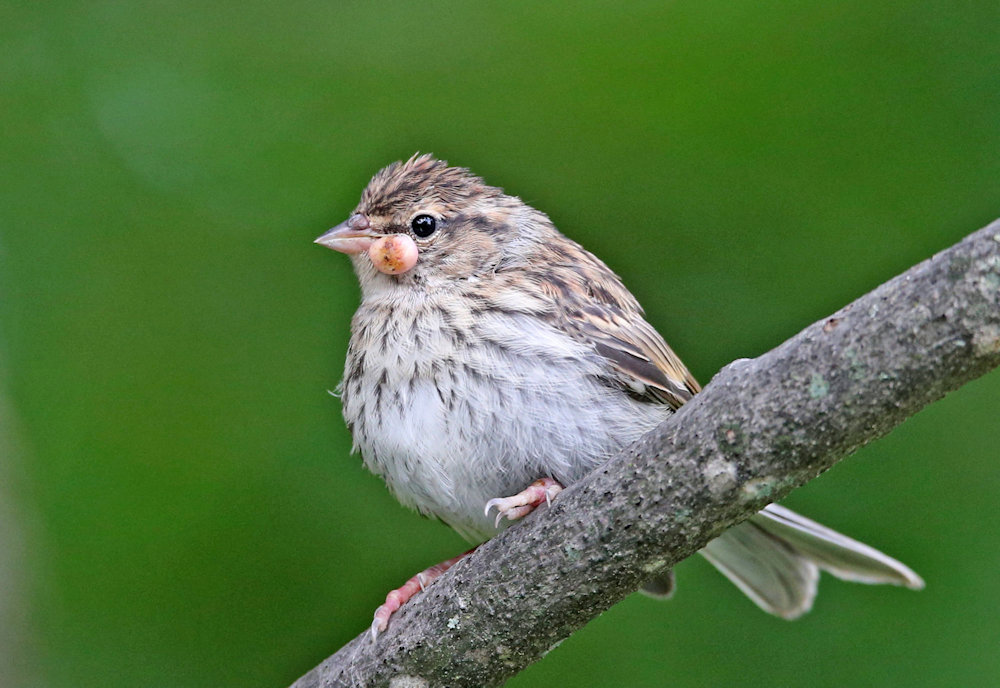
Although less common at bird feeders in Québec than the two conditions described above, poxvirus infections may also be observed, particularly in sparrows, mourning doves, and American crows (Photo 3). This virus causes the development of wart-like skin masses. Avian keratin disorder (AKD) causes overgrowth of the beak, often associated with malocclusion resulting in a crossed bill (Photo 4). This condition, which is likely caused by a virus, appears to be emerging in Québec, particularly in woodpeckers and nuthatches, although laboratory confirmation has not yet been achieved.
Finally, salmonellosis is another condition observed in feeder birds, occurring mainly in winter, particularly among pine siskins. This bacterial disease, which is not documented every year, poses a risk of infection to domestic cats that prey on birds and to humans (zoonosis). Infected birds are usually weak, have ruffled plumage, or are just found dead.
In general, feeding wild animals is not recommended. However, feeding birds in urban and peri-urban areas is usually tolerated, and even encouraged. What are the risks associated with this practice, and are these risks offset by the benefits of providing additional food for birds? First, by causing birds to aggregate, feeders increase contact between individuals, which can promote the transmission of pathogens such as mycoplasmas, salmonella, and viruses. In addition, feeding stations may encourage contact between different species that would not normally interact in natural environments, thereby increasing the risk of pathogen transmission to more susceptible species. One example of this involves the protozoa responsible for trichomoniasis, which are often found asymptomatically (without causing clinical signs) in columbids such as doves. These birds may contaminate seed trays, thereby infecting less well-adapted species such as American goldfinches, in which the disease can develop. By attracting birds close to homes, feeding stations can also increase the risk of window collisions and predation by domestic cats. Bird feeding may also alter population dynamics by favouring certain species at the expense of others, influence migratory behaviour, or promote the expansion of introduced exotic species such as the Eurasian collared dove.
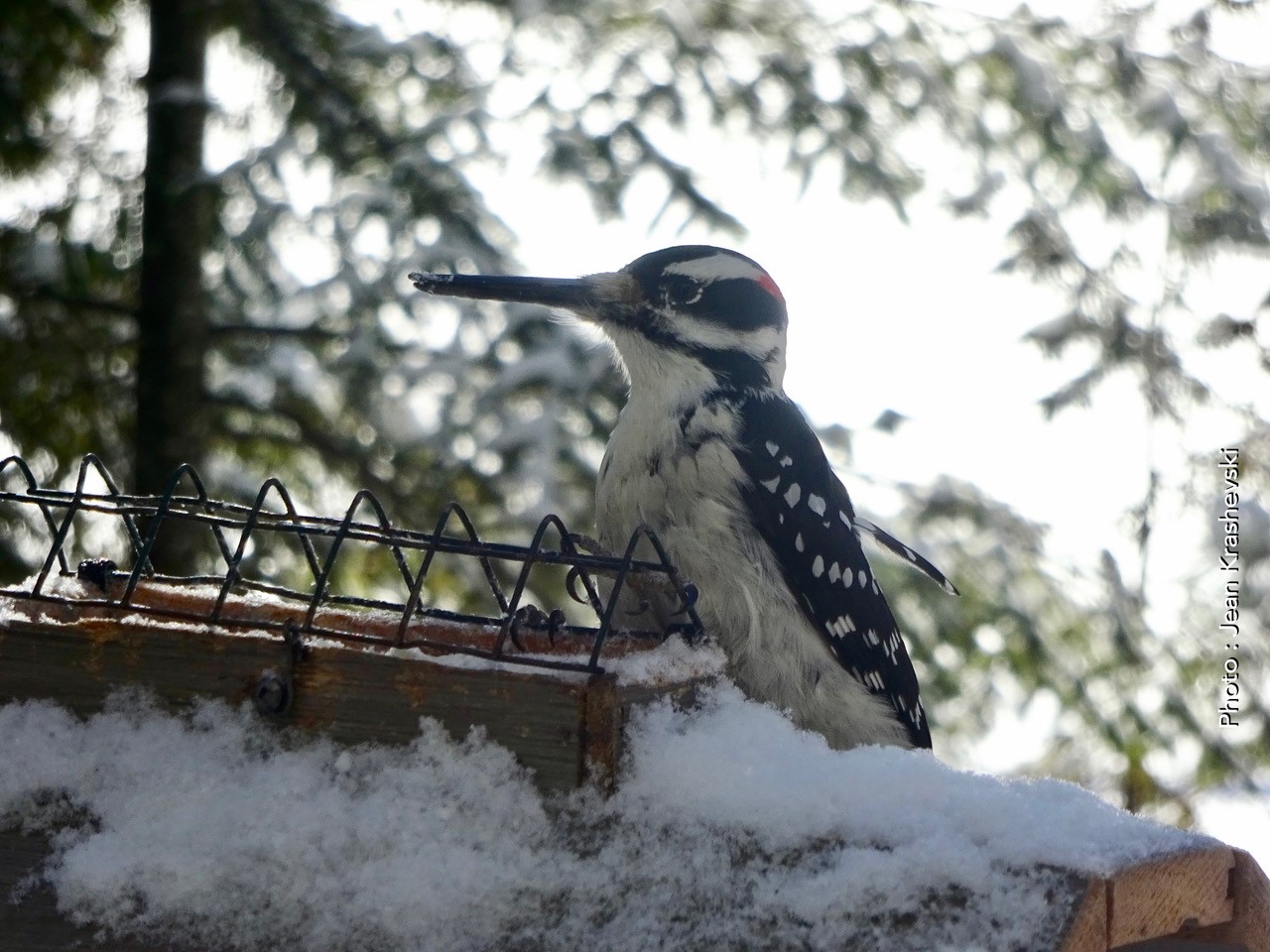
Despite these potential negative impacts, feeding stations also offer certain benefits to bird populations. For example, several studies have shown improved survival and reproduction in certain species when feeder stations are provided. In general, populations of species commonly observed at feeding stations appear to be doing relatively well, suggesting an overall positive effect of this practice, at least in North America. In the United Kingdom, however, it has been suggested that feeding birds at feeders may have contributed to the decline of a passerine species, the European greenfinch, due to a significant increase in mortality caused by trichomoniasis. A negative impact of feeding has also been suggested for the boreal chickadee due to increased populations of great spotted woodpeckers (which benefit from feeding), a species known to prey on chickadee nests.
Nevertheless, feeding birds at home remains a valuable tool for raising awareness about wildlife conservation, particularly among young observers. This activity can also contribute to various citizen science programs such as FeederWatch. Several studies also suggest recreational and educational benefits of this activity for those who feed birds. In conclusion, providing bird feeding stations can have both negative and positive impacts and is often most beneficial to the person feeding the birds. As Paul Baicich once said: “The birds don’t need the feeders. We do.”
That said, certain practices can be implemented to minimize the negative impacts of bird feeding:
- Moderate your enthusiasm to control large gatherings: limit feeding stations to two or three per site.
- Favour small-capacity feeders and designs that minimize contamination with feces.
- Use high-quality seeds to avoid food accumulation.
- Clean feeders regularly with soapy water, followed by soaking in a bleach solution (1:9).
- Wear gloves and wash your hands thoroughly to minimize the risk of contracting zoonoses such as salmonellosis.
- Temporarily stop feeding birds (for two weeks) if you observe sick or dead birds at your feeders. Feeders should then be disinfected and the remaining seed discarded.
- Feed birds only during the winter season to limit the transmission of trichomoniasis.
- Install rodent- (and predator-) deterrent baffles on feeder poles.
- Hang feeders at least 2 m (7 feet) above the ground and at least 12 feet (3.5 m) away from shrubs or hiding places for cats to reduce predation risk.
- Place feeders within 5.5 m (15 feet) of a tree that can serve as a refuge for birds.
- Do not allow cats outdoors unsupervised.
- Apply window decals (e.g., Feather Friendly) to reduce the risk of collisions.
Since the emergence of highly pathogenic avian influenza, some agencies have discouraged bird feeding. Because species frequenting urban feeding stations (mainly passerines) do not appear to play a significant role in the dynamics and transmission of this disease, this practice does not seem to increase the risk of spreading the virus. However, feeding aquatic birds such as ducks, geese, and gulls—primary reservoirs of this highly pathogenic virus—should be avoided. In addition, if you keep backyard poultry, it is preferable to avoid encouraging contact with wild birds.
In conclusion, bird feeding is an enjoyable activity, but one that must be practised with caution. Birds do not truly need feeding stations, but this activity can have value for us. Responsible management makes it possible to maximize benefits while minimizing risks to the health of birds, domestic animals, and human populations. That said, if you wish to have a real impact on biodiversity, you can modify your environment to promote natural food sources and nesting sites for birds, for example by planting fruit trees and native grass species.
Submitted by Stéphane Lair, CWHC – Québec