
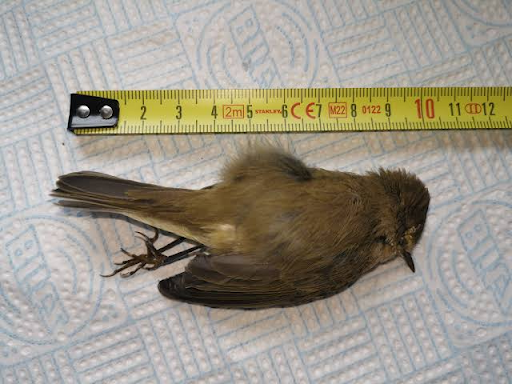
A big part of what we do at the Canadian Wildlife Health Cooperative is conducting diagnostic investigations to determine the cause of death (or illness) in wildlife. We heavily rely on the public or wildlife agencies to report sick or dead wildlife to us.
Often, the initial report comes to us as a photograph, and when transporting the animal to one of our laboratories is impractical, that photograph may be the only evidence available.
As a consequence, the quality of the photograph is very important to maximize the likelihood we’ll determine the cause of illness or death from the image alone. Further, images can provide important contextual information like the wildlife species involved, body position, and environmental conditions.
In that light, we’ve put together the following tips to help reporters take the best images possible:
- Take images of the whole body from multiple perspectives in the place you found it.
- First take a zoomed out image of the injured body part/tissue that provides context for where in the body the injury is located.
- Take a series of progressively closer images centered on lesion to allow for evaluation in greater detail.
- Use a scale bar…or hand, or foot! This helps us determine the size of the animal (which helps with species identification and the size of the lesion or injury).
- Always place the lesion or injury in the center of the frame of view when taking close-up photos.
- Ensure the lesion is always in focus (this is critical).
- Finally, always consider the lighting, avoid shadows and glare that can obscure the lesion in the captured image.
Remember to practice good hygiene practices: Use gloves when touching dead animals, and be sure to wash your hands after.
And please use our reporting tools to report it to us!