
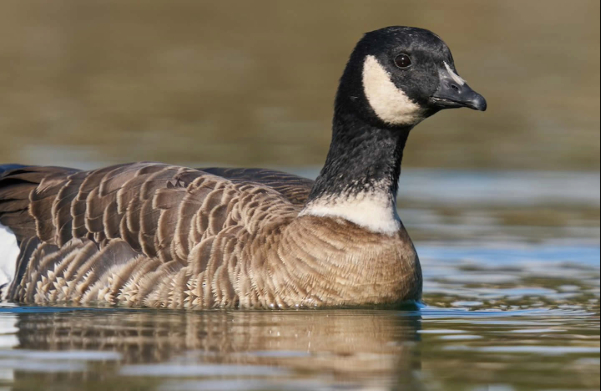
Animals do not recognize provincial or national borders, and understanding their movements, health, and populations requires many organizations working toward a common goal. At the CWHC’s Ontario/Nunavut node, collaboration is at the heart of what we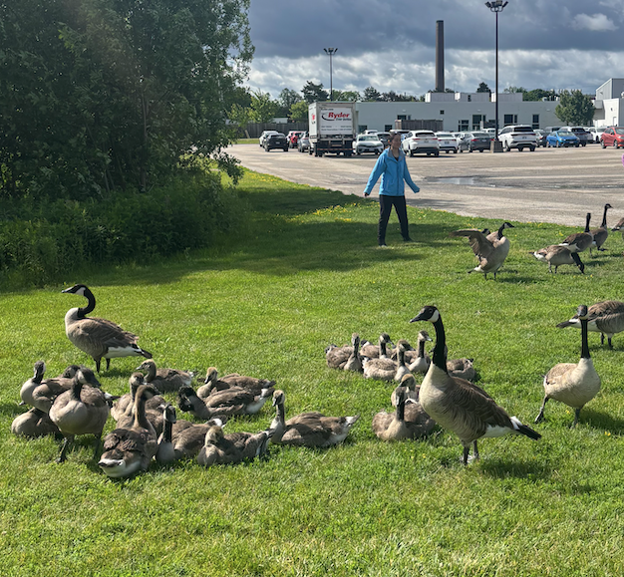 do. Our partnerships allow us to combine expertise, share information, and build a more complete picture of wildlife health across the province.
In June 2026, the Ontario/ Nunavut node of CWHC had the opportunity to join the Environment and Climate Change Canada – Canadian Wildlife Service (ECCC-CWS) for a day of Canada Goose banding in southern Ontario. This fieldwork provided us with an opportunity to see how collaboration helps strengthen wildlife research and conservation efforts.
If you have ever spotted a goose wearing a small metal band on its leg, you have seen a valuable wildlife research tool in action. Each year, ECCC-CWS safely captures and bands geese during their annual moult, when the birds temporarily cannot fly 1. During banding, researchers record information such as the bird’s unique band number, age, sex, location and date of capture. The numbered band is then loosely crimped shut around the goose’s leg. Once the banding is complete, these records are submitted to the Bird Banding Office and incorporated into an international Bird Banding Laboratory (BBL) database 2.
Every band’s unique identification number allows researchers to learn where the birds travel, how long they live, as well as estimate harvest and survival rates to see how populations might change over time 1,2. This information about movement and migration patterns can also be valuable when investigating wildlife health events. For example, this information can be useful in avian influenza (AIV) outbreaks to help researchers better understand the virus’ potential impacts across large geographic areas 1,3.
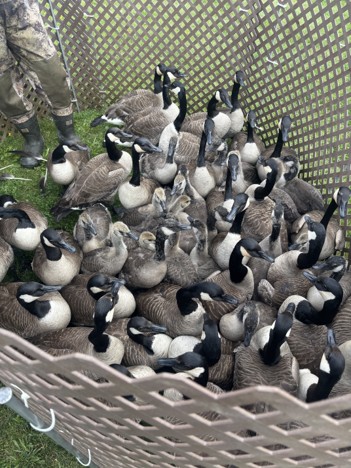 Banding also provides an opportunity for researchers to collect wildlife health information. During the banding process, CWS also collects blood samples and swabs from a subset of birds to support AIV and other wildlife health initiatives. Blood samples can provide information about previous virus exposure and immune responses, while swabs can help identify birds that are actively shedding the virus 4. Since 2022, nearly 3,000 Canada geese sampled during moulting in eastern Canada have yielded only one AIV detection and no highly pathogenic AIV detections (ECCC-CWS, unpublished data). Together, these samples help researchers monitor and identify changes in disease activity over time in wild bird populations.
Collaborations with organizations like CWS allow us to share knowledge, coordinate responses, and better understand wildlife populations, including the factors that influence their health. By banding together across agencies to combine our different perspectives, resources, and information, we can strengthen wildlife health monitoring and support more informed conservation efforts across the province.
Prepared by Kaitlyn Young
References
- Environment and Climate Change Canada. (2019). Migratory gamebird introduction and methods. Government of Canada. https://wildlife-species.canada.ca/bird-status/methodes2-methods2-eng.aspx?sY=2019&sL=e
- Meyer, S. W., & Sharp, C. M. (2016). Pre-season duck banding in Ontario, 1918-2014 and distribution of hunter recoveries. Ontario Birds, 34(1), 3.
- Young, C. A., Meyer, S. W., & Sharp, C. M. (2012). Band Encounters of Canada Geese Banded in Ottawa, 1987-2011. Ontario Birds, 30(3), 1.
- Takahashi, K., Takeda, Y., Nishiyama, K., Fukuyama, M., Maeki, M., Ishida, A., Tani, H., Imai, A., Shigemura, K., Hibara, A., Ogawa, H., & Tokeshi, M. (2026). Detection of H5 subtype avian influenza virus in avian oropharyngeal swab samples using a microfluidic non-competitive fluorescence polarization immunoassay. Analyst (London). https://doi.org/10.1039/d6an00505e