

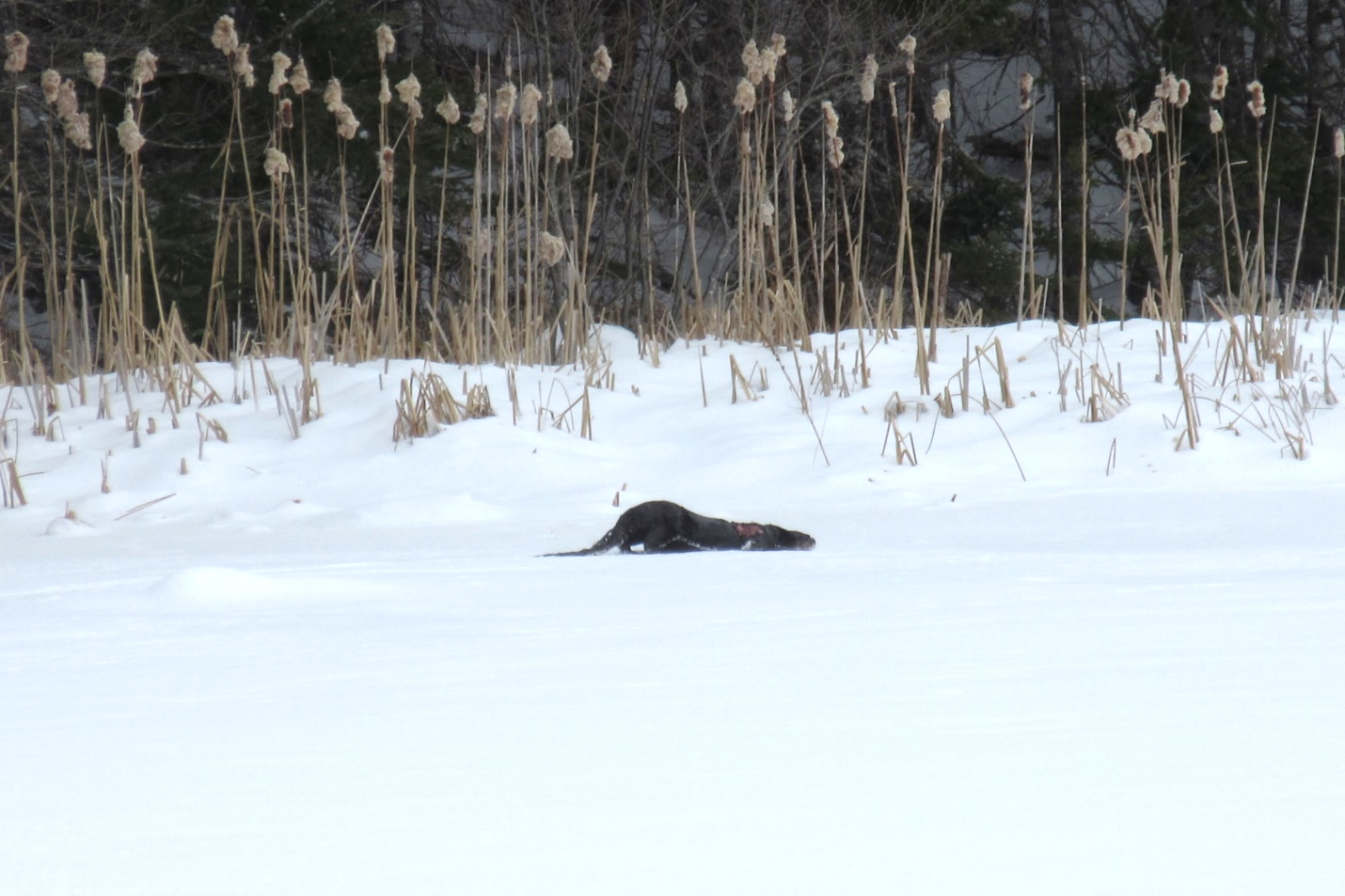
Two river otters from the Soldier’s Bay area in Cape Breton (Nova Scotia) were submitted to CWHC-Atlantic for necropsy. The otters had been spotted in the field exhibiting regions of hair loss on their skin (Figure 1).
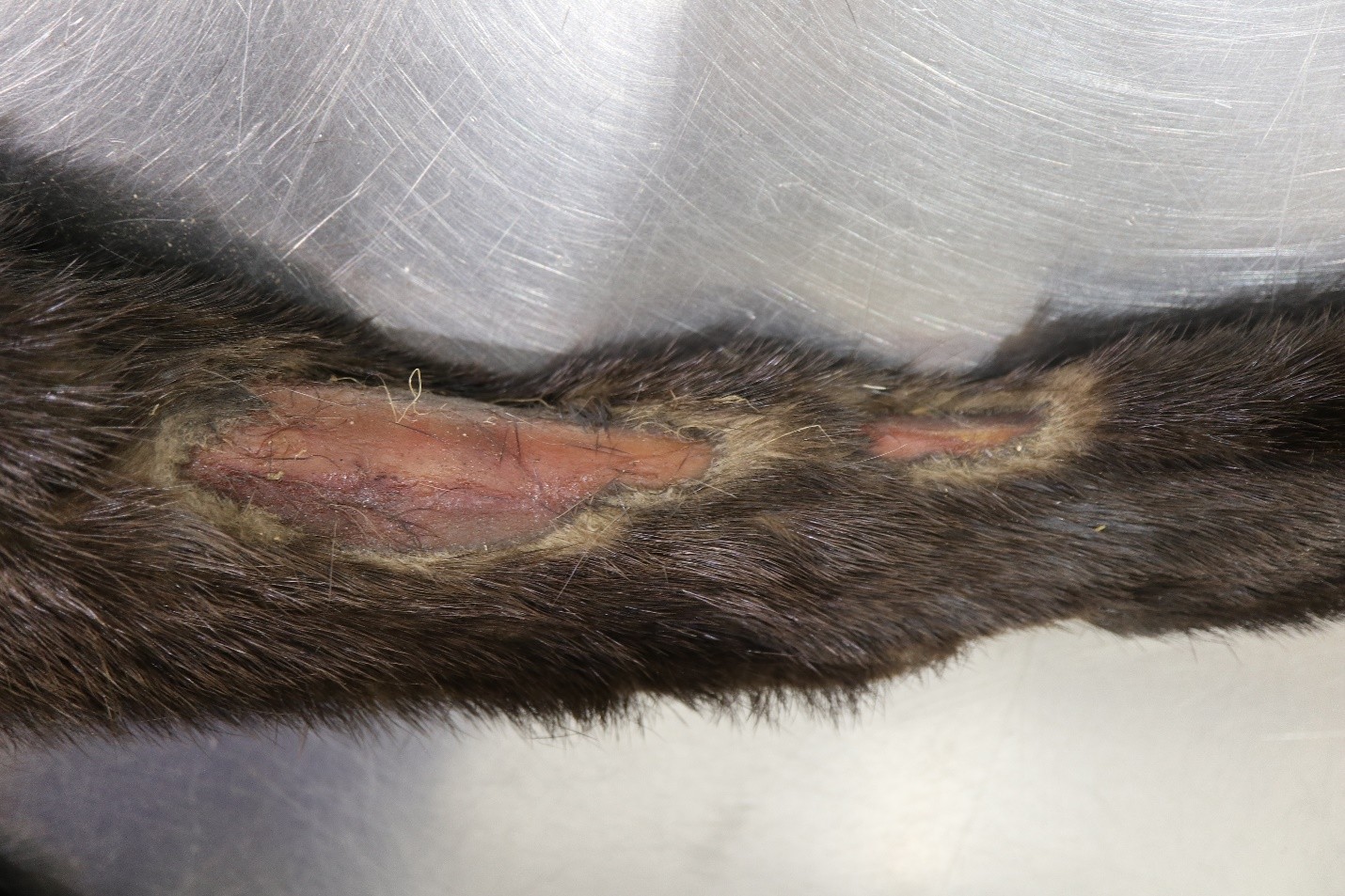
Both otters had multiple very extensive regions where their fur was either severely matted or entirely hairless (ulcers). In ulcerated regions, the exposed skin was very smooth, red to pink, and sore appearing (Figure 2). In regions where the fur was matted, closer inspection revealed the hair was coated in exudate and likely in the processes of progressing to ulceration. Culture of the lesions revealed a variety of bacterial species that were likely secondary contaminants.
Microscopic examination provided the first concrete clue as to the possible cause of these ulcers. The skin of both otters was heavily infiltrated by granulomatous inflammation which was associated with large numbers of acid fast positive rod bacteria that formed short chains. Acid fast is a very useful stain in identifying bacteria that belong to the genus “Mycobacterium” as these bacteria do not readily grow using standard aerobic/anaerobic culture methods. Targeted testing for species in this genus has revealed that both otters were infected by the species Mycobacterium marinum. This bacteria is well known to cause disease in fish, but to our knowledge it has never before been associated causing ulcerative dermatitis in river otters. At this time, we have had multiple reports of ulcerative skin disease in river otters around Cape Breton, and so we are hoping to collect more diagnostic specimens to further characterize what appears to be a new disease in river otters. If you have observed otters exhibiting skin disease in Cape Breton, please contact us at atlantic@cwhc-rcsf.ca. Taking pictures and noting the date, time, and location of the observation would be extremely helpful.
Watch the CBC interview here: https://www.cbc.ca/player/play/video/9.7274253