
The Western/Northern Regional Centre of the CWHC is part of the Department of Veterinary Pathology at the Western College of Veterinary Medicine in Saskatoon and, in addition to our wildlife diagnostic responsibilities, we are also involved in teaching fish and wildlife health topics to undergraduate and graduate students. This spring and summer we are offering three two-week long wildlife health rotations to fourth year DVM students. During these rotations, students perform autopsies on wildlife submissions to our lab, write reports on their findings, learn about histopathological examinations and diagnostic testing, and then interpret their findings as they relate to the broader issues of wildlife and One Health. Students are also asked to write a blog article about a topic relevant to wildlife health based on the cases we see during the rotation. Below is an article written by one of the students who took this course in early May; Brooke Schley wrote about electrocution in raptors. Since 2024, around 10% of raptors submitted to the Western/Northern Regional Centre have died from electrocution.
Power Line Electrocution of Raptors
By Brooke Schley
Power line electrocution is a significant cause of avian mortality, with an estimated 0.9 to 11.6 million birds being fatally electrocuted each year in the United States. A variety of risk factors, including body size, habitat, young age, weather and power line configuration can all predispose birds to electrocution. The most frequently electrocuted birds are eagles, Buteo hawks, and large owls, with Golden eagles being the most commonly affected species.
Large raptor species are at greater risk for electrocution due to their large wingspan and size, as well as their tendency to use power poles for roosting, hunting perches and nesting. Electrocution is particularly a problem for raptors living in treeless areas and open habitats due to these perching behaviours. In addition, immature or juvenile raptors are more likely to be electrocuted presumably due to their inexperience and awkwardness when taking off or landing. Weather can also increase risk of raptor electrocution by causing feathers to become wet, reducing visibility and causing birds to become off balance in strong winds. Feathers are normally poor electrical conductors, but if they become wet or if the bird contacts electricity with its skin, beak, or talons, conduction and electrocution can occur. Power line configuration also plays a role as, for example, birds are more frequently electrocuted on distribution lines that have only a moderate voltage of 2.4 to 60 kilovolts (kV), due to the wires (or conductors) being placed closer together as compared to the higher voltage transmission lines. Similarly, complicated wiring configurations can also increase the risk for raptor electrocution due to the placement of multiple energized and grounded metal parts near the locations that raptors prefer for their perching and nesting sites.
Raptors are electrocuted when they simultaneously contact two energized electrical components or electricity and a grounded object. On a power line, this might mean touching two wires, contacting a live wire and a non-insulated power pole or contacting electrical equipment such as a transformer. As a result, the birds complete an electrical circuit that passes a current through them, causing damage along the path of least resistance. The electrical current, or shock, causes severe injury to the bird and is usually fatal. Although not completely understood, the mechanism of death most likely results from the current passing directly through the heart or through the cardiac and/or respiratory centers in the brain. Birds usually die immediately after electrocution, and as a result, are most commonly found dead underneath or near power lines. Some birds, however, may recover after the initial injury, or may die later from complications such as secondary infections.
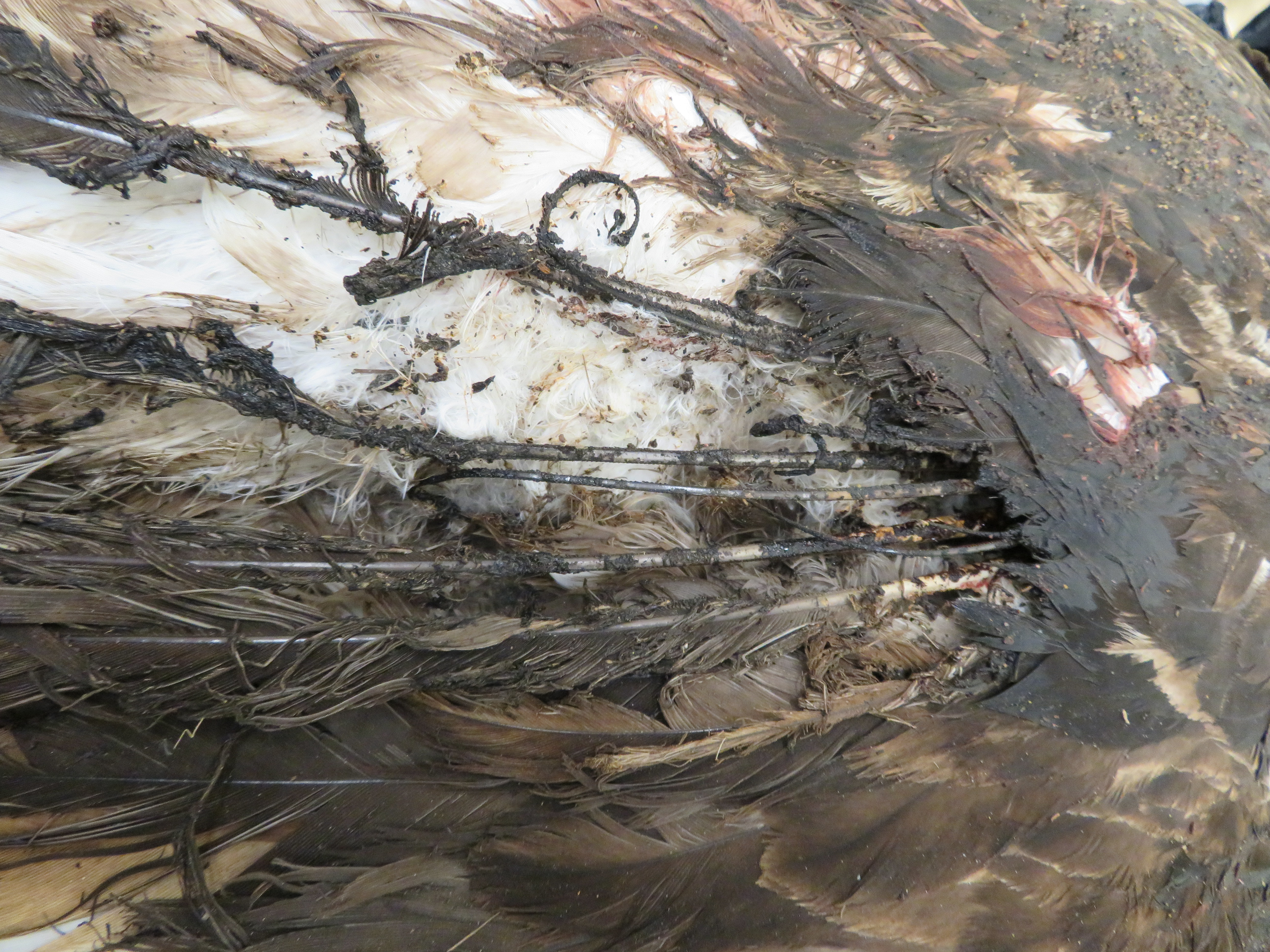
The hallmark gross lesions of electrocution are burn marks. These burns can have a vast range in appearance from subtle feather disruptions to full amputations of limbs. In some cases, visible burns may be very difficult to locate or may be hidden under overlapping feathers. Most commonly, burns are localized to sites where the bird contacted the electrical source; however, feathers can ignite, leading to the majority of the bird’s body being charred. Small burns found near one another can also be supportive of an arcing injury, which is caused by electricity “jumping” from high-voltage power lines to the bird’s body. Burns cause feathers to appear curled or twisted, and can also discolour them to a brown or black. Blisters can also form on the skin from burns, with scales on the feet or legs being the most common locations. In some cases, burns can be so severe that they can extend through the skin, cauterizing muscles and tendons, liquefying fat and even cause bones to fracture. Fractured bones from electrocution may also result in traumatic amputation of the birds’ wings, legs or digits.
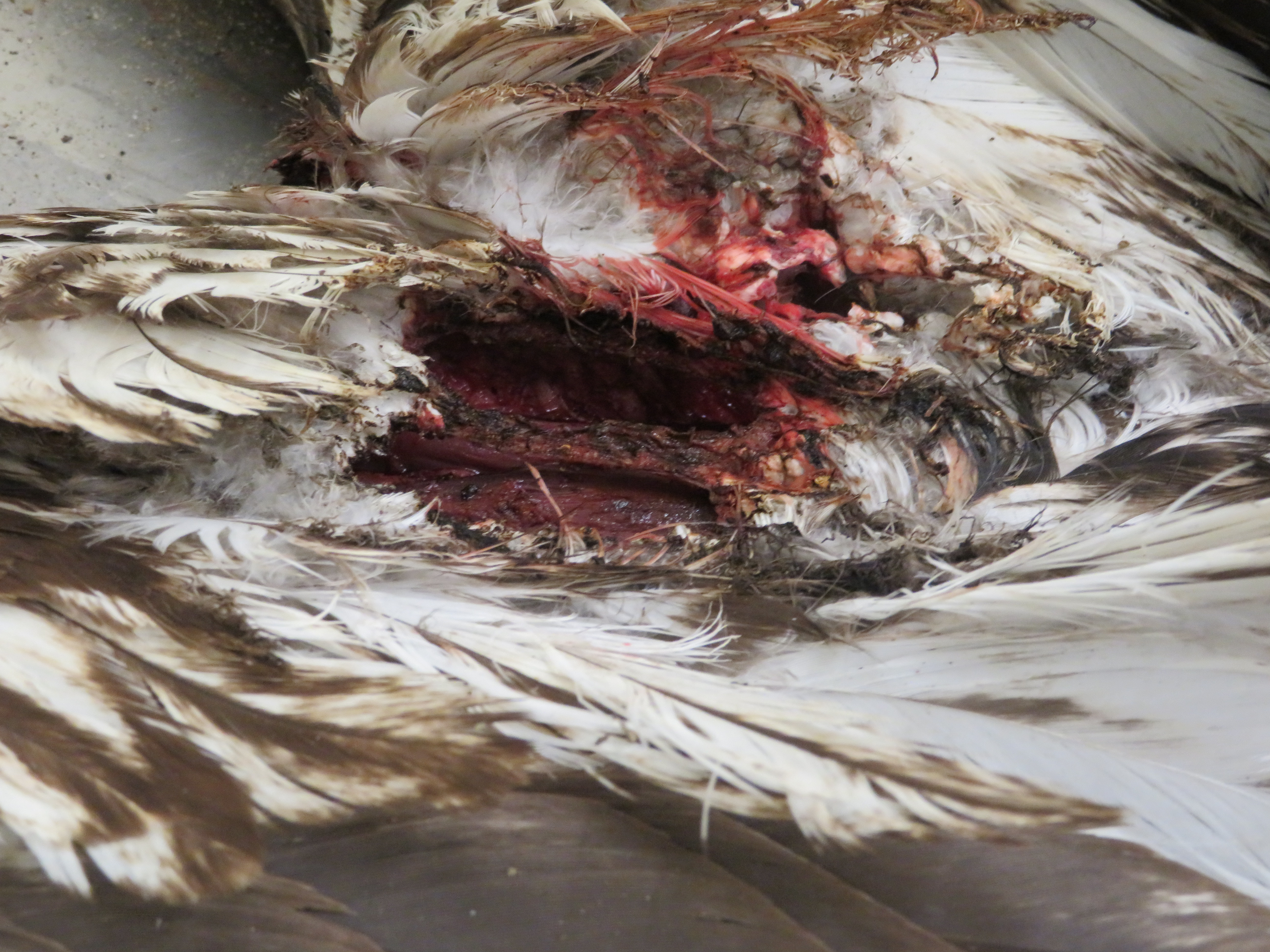
Pathologists most commonly diagnosis electrocution by confirming the presence of burns and ruling out other causes of death. The presence of two or more burn wounds, indicating entry and exit points of the electrical current, is key to support the diagnosis. Electrocution can also cause subcutaneous tissue and internal organ hemorrhage because of the cardiovascular injury, which can further aid pathologists in making their diagnosis. The history and location of where the bird was found, such as near a power line, is also helpful in supporting a diagnosis of electrocution.
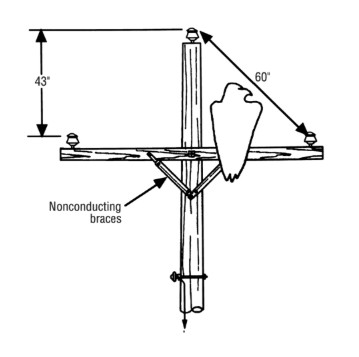
Raptor electrocutions can be reduced in several ways including managing common perching sites and implementing safer electrical power poles and line configurations. Wires can be reconfigured so that they are separated from each other and grounded metal parts at appropriate distances so that the raptors cannot touch them simultaneously. Insulation or reconfiguration of existing hazardous wiring can also be done to help decrease the risk of raptor electrocution. Another approach that is both effective and economical is to modify selected poles and provide alternative nesting and roosting sites. Hazardous perches can also be blocked, and such poles can be identified based on field observations of bird use and mortality. Power companies also benefit from adopting safer power line configurations as it can help reduce costly power outages as well as create a positive public image. Future electrical installations can also be planned and designed to help decrease the likelihood of raptor electrocution, which will hopefully reduce the risk of further avian mortalities.
References:
- Hawk Migration Association. (2024). HMA statement on raptor electrocution. https://www.hawkmigration.org/raptor-electrocution-position-statement/
- Kagan, R. A. (2016). Electrocution of raptors on power lines: A review of necropsy methods and findings. Veterinary Pathology, 53(5), 1030–1036. https://doi.org/10.1177/0300985816646431
- Lehman, R. N., Kennedy, P. L., & Savidge, J. A. (2007). The state of the art in raptor electrocution research: A global review. Biological Conservation, 136(2), 159–174. https://doi.org/10.1016/j.biocon.2006.09.015
- Friend, M., & Franson, J. C. (1999). Field manual of wildlife diseases: General field procedures and diseases of birds (Information and Technology Report 1999–0001). https://pubs.usgs.gov/itr/1999/field_manual_of_wildlife_diseases.pdf
- Wiley. (2018). Mitigation techniques fall short of preventing electrocution of golden eagles on power poles. Phys.org. https://phys.org/news/2018-01-mitigation-techniques-fall-short-electrocution.html