
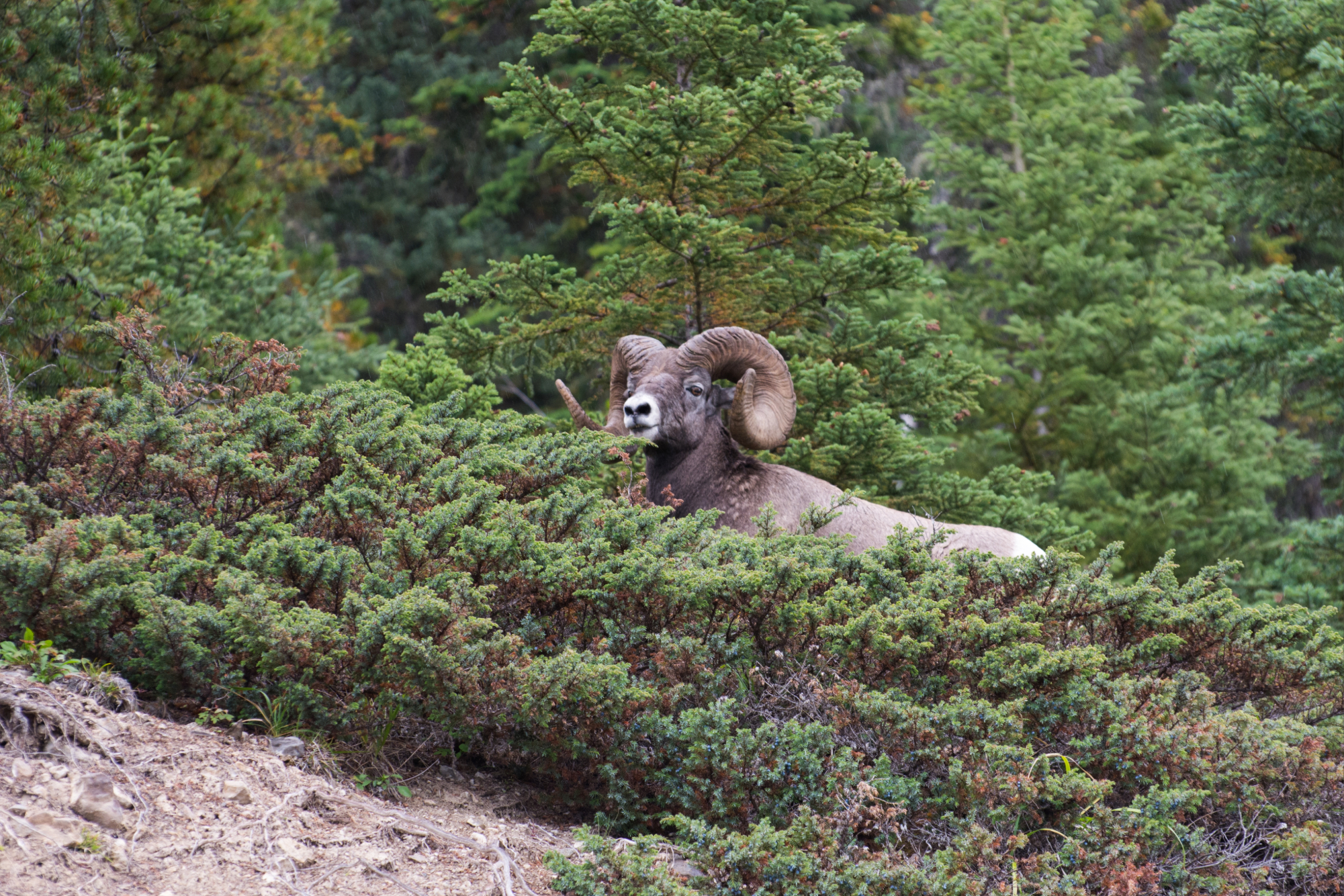
This spring, a collaborative necropsy workshop brought together partners from across Alberta to strengthen field-based monitoring of bighorn sheep populations. The event, organized by the Wild Sheep Foundation Alberta (WSFAB) in collaboration with the Environment ad Protected Areas, the University of Alberta and the CWHC focused on building practical skills for population monitoring and investigating mortality events in this iconic species.
One of the ways that bighorn sheep in Alberta are monitored is through a combination of field surveys and radio-collaring programs. These collars provide valuable information on population trends, herd composition, and seasonal movements, while also enabling the rapid detection of mortality events. Timely investigation of these events is critical for understanding causes of death and informing management decisions.
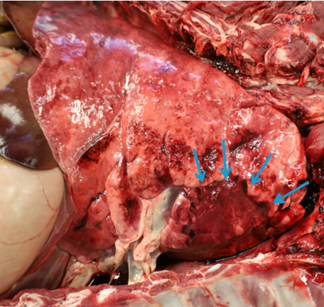
A key health concern for bighorn sheep in the province is pneumonia associated with Mycoplasma ovipneumoniae (commonly referred to as Movi). Movi is a bacterial infection that bighorn sheep can acquire from domestic sheep and goats that leads to increased susceptibility to other respiratory pathogens and can result in severe pneumonia. Disease outbreaks linked to this pathogen can have significant impacts on populations, making early detection and accurate field assessment especially important (Figure 1).
The workshop provided participants—including biologists and WSFAB volunteers—with hands-on training in a simplified necropsy approach appropriate for field conditions. Under the guidance of a veterinary pathologist, participants learned how to systematically examine carcasses, with a particular focus on assessing the respiratory tract for lesions consistent with Movi-associated pneumonia
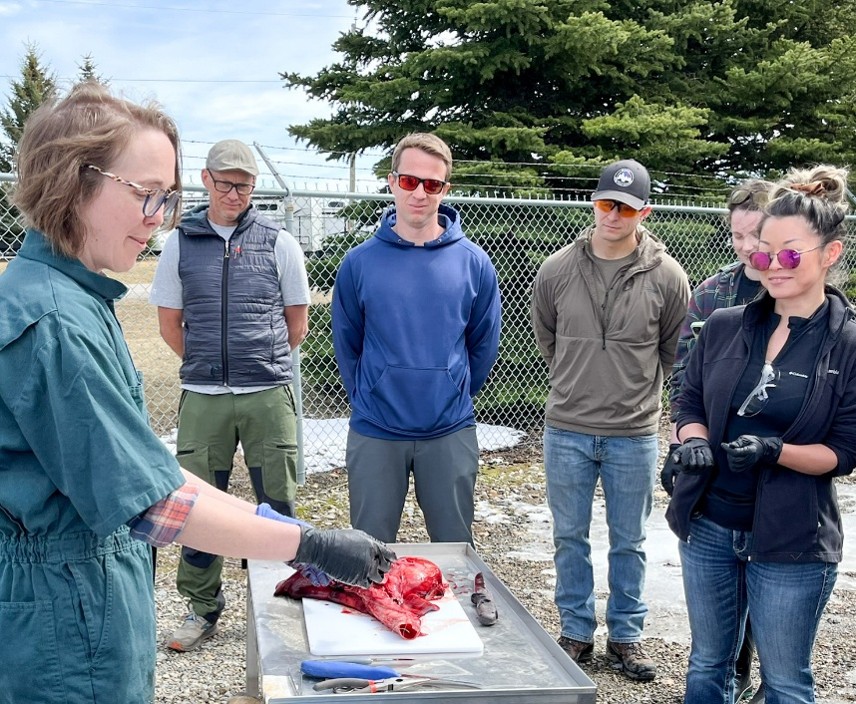
A central strength of this program is its utilization on trained volunteers. Through WSFAB’s citizen science-based monitoring efforts, community members play an active role in responding to mortality signals from radio-collared animals and conducting initial field investigations. Many of these volunteers are hunters with extensive on-the-ground experience and a deep understanding of wildlife on the landscape, as well as a strong appreciation for the importance of maintaining healthy, sustainable populations. Training opportunities like this workshop help ensure that these efforts generate consistent, high-quality observations that can support further diagnostic work. Citizen science based approaches also help to generate a shared sense of stewardship for the health of wildlife populations. By expanding the network of individuals equipped to recognize and document disease, the program enhances both the spatial and temporal coverage of monitoring efforts in SW Alberta.
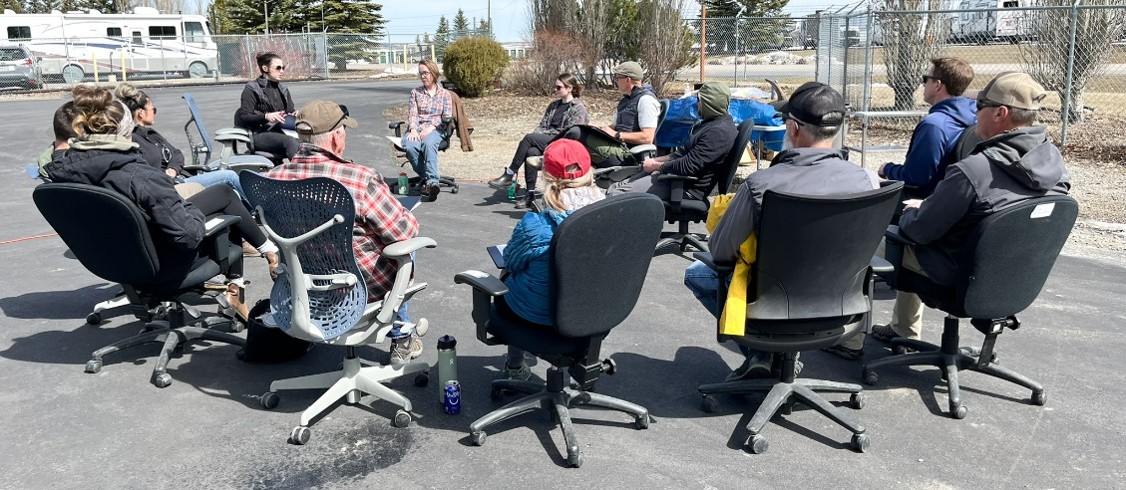
Initiatives like this demonstrate how applied training, community engagement, and cross-sector partnerships can work together to strengthen wildlife health surveillance. For Alberta’s bighorn sheep, these collaborative efforts are an important part of ongoing conservation and management.