 Since the original detection of the protozoa Toxoplasma gondii and Sarcocystis neurona in stranded marine mammals with varying degrees of meningoencephalitis, there have been increasing efforts to screen case material for another terrestrial protozoa, Neospora caninum. Serology has detected antibodies to N caninum in a number of marine mammal species, including walruses, sea otters, harbor seals, Steller sea lions, California sea lions, ringed seals, ribbon seals, spotted seals, bearded seals, Guadalupe fur seals, northern elephant seals, dugongs, bottlenose dolphins, killer whales, short-finned pilot whales, and polar bears; however, no confirmed cases of infection have previously been reported. These marine mammal species are sentinels for land-to-sea pathogen transfer, also referred to as pollutagens.
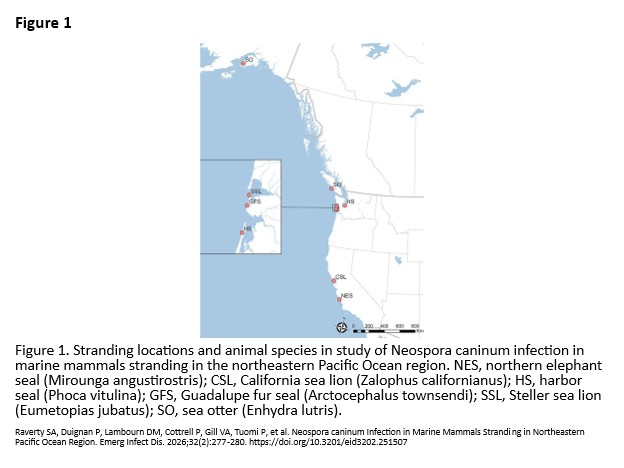
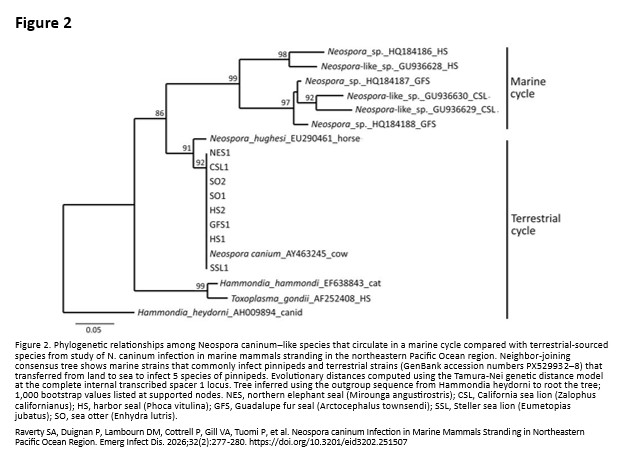
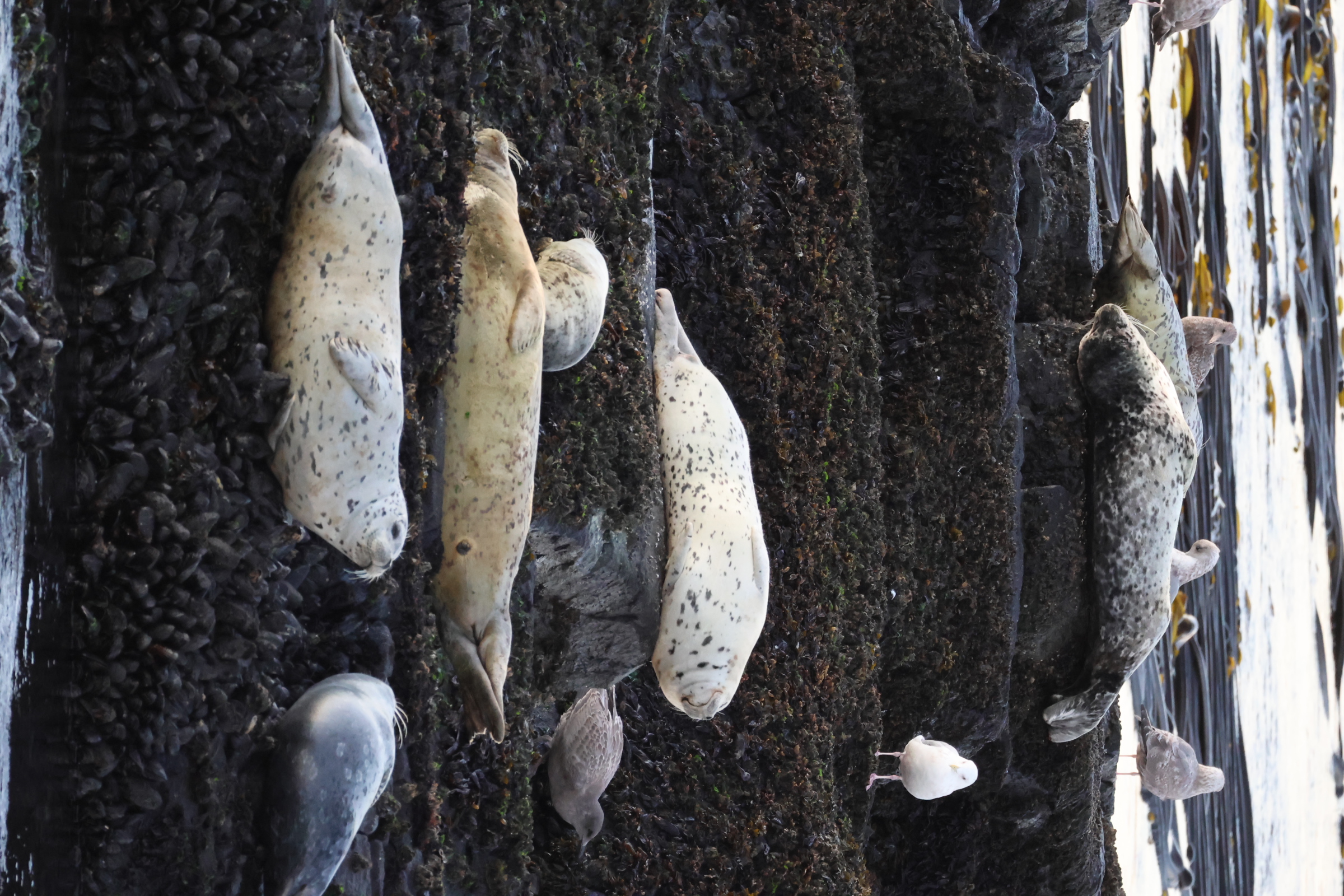 As part of a survey of protozoal fauna of stranded marine mammals along the western seaboard of the United States and Canada, immunohistochemistry and polymerase chain reaction (PCR)-DNA sequencing analyses were used to screen for N caninum, and infection was confirmed in 6 species and in 8 individual animals. These findings not only expand the habitat for N caninum into the marine environment but also increase the number of host species susceptible to infection. Results from past serology studies across a variety of marine mammal species may have been confounded by infection with novel Neospora sp. (types A, B, and C) and by shared antigenic determinants (epitopes) with S. neurona and T. gondii.
Histopathology (microscopic assessment) of the tissues from test-positive animals did not reveal any discernible lesions, and the contribution of N caninum to antemortem clinical disease or death is unknown. However, with dairy cattle, abortion outbreaks and neonatal loss may result from infection. Identification of N caninum in a harbor seal pup, a northern elephant seal weanling, and a pregnant Steller sea lion suggests in utero exposure, which may contribute to reproductive or perinatal issues. With advances in molecular techniques and recognition of these novel infections in marine mammals, our armamentarium for detecting and confirming exposure to novel pathogens continues to expand, and these findings provide valuable information for species conservation and management.