
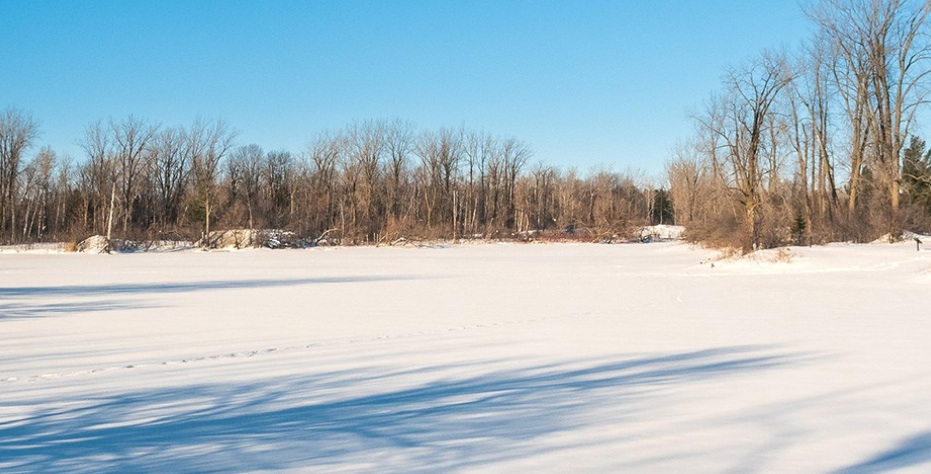
A large number of carcasses of northern pike and sunfish were observed in mid-March under the ice of the Lacs des Fauvel located in Blainville, in the Laurentides region north of Montreal, Quebec. Observers also reported the presence of “catfish” still very much alive at the site, as well as a strong methane smell when the ice was broken. The Lacs des Fauvel are artificial lakes created on a former sand and gravel extraction site (quarries) and are fed by groundwater (the Sainte-Thérèse esker) and rainfall. These lakes are located in the centre of a municipal park that supports a rich biodiversity.
This episode of massive fish mortality raised many questions among citizens visiting the site, especially due to the presence of a nearby facility that processes residual materials and contaminated soils.

Fish found dead were submitted for analysis to the Quebec regional centre of the Canadian Wildlife Health Cooperative. Postmortem examination of the fish did not reveal any pathological condition that could explain the observed mortality. However, these examinations made it possible to rule out infectious causes (such as viral or bacterial infections). This observation, along with the epidemiological pattern of the mortality event, instead suggests an environmental cause, such as physicochemical water conditions lethal to certain species, or an acute exposure of fish to toxic compounds. In most cases, pathological analyses performed on dead fish do not allow a definitive identification of the cause of an environmental problem. Indeed, during toxic spills or water quality issues, fish usually die quickly and do not have time to develop lesions or accumulate toxic pollutants in their tissues. Furthermore, although exposure to certain caustic substances such as chlorine can cause “burns” to the gills, this type of acute lesion is usually masked by changes caused by the rapid decomposition of fish carcasses. Consequently, although pathological examination of fish is essential, identifying the cause of a mass fish mortality event must rely primarily on epidemiological observations and field analyses.
When assessing such situations, various elements, such as the epidemiological curve of mortality, the species affected (and “spared”), the site characteristics, the presence of a potential pollution source at or upstream of the site, as well as the season and weather conditions, must be considered. First, the death of many fish within a short period is suggestive of an acute exposure to lethal environmental conditions. Mortality events caused by infections (viruses, bacteria, parasites) are usually associated with a more gradual mortality curve, over several days to a few weeks. In addition, most pathogens are species-specific and are therefore not usually associated with multi-species mortality events such as the present case. Conversely, the discharge of a toxic substance into a water body will typically cause the death of a large proportion of fish regardless of species. The mortality of certain fish species (pike and sunfish) and the survival of others (“catfish”) is more suggestive of an alteration in the physicochemical parameters of the water, such as low dissolved oxygen. Indeed, some species are more sensitive than others to variations in these parameters, so not all species present in the water body will be equally affected. In the mortality event in Lacs des Flauvel, the observation of live “catfish,” a group of fish known to be more resistant to hypoxia (low dissolved oxygen levels) than pike and sunfish, supports the hypothesis of an oxygenation problem. Moreover, the time of year (late winter) also supports the likelihood of winter hypoxia, a well-documented syndrome in cold regions such as Quebec. Naturally, fish need oxygen to survive, and rapid, massive mortality can occur when dissolved oxygen levels are too low. Oxygen in a lake comes mainly from three sources: (1) dissolved oxygen input from water sources feeding the lake; (2) oxygen from gas exchange at the air–water interface; and (3) oxygen produced by photosynthesis by plants and algae. During winter, the presence of ice and snow on the lake surface blocks gas exchange and significantly reduces photosynthesis by limiting sunlight penetration. Consequently, when the lake is frozen, maintaining oxygen levels depends primarily on oxygen input from inflowing water sources. Since the groundwater feeding the Lacs des Fauvel is very low in oxygen, oxygen levels in the lake gradually decrease during the ice-covered period due to consumption by fish and decomposition of organic matter. If the ice-cover season is prolonged, as was the case this winter, oxygen levels can drop below the tolerance threshold of some species, resulting in mass mortality. Preliminary results from water analyses conducted by the municipality support the hypothesis of a winter hypoxia problem.
Consequently, although toxic discharges associated with industrial activities can cause mass fish mortality and must be evaluated, the epidemiological characteristics of this event do suggest a problem of water oxygenation. This event demonstrates that although artificial peri-urban ecological developments can promote biodiversity and are should therefore be encouraged, these man-made habitats often remain less resilient than natural ecosystems and are thus more sensitive to environmental disturbances.
Stéphane Lair, CWHC – Quebec