
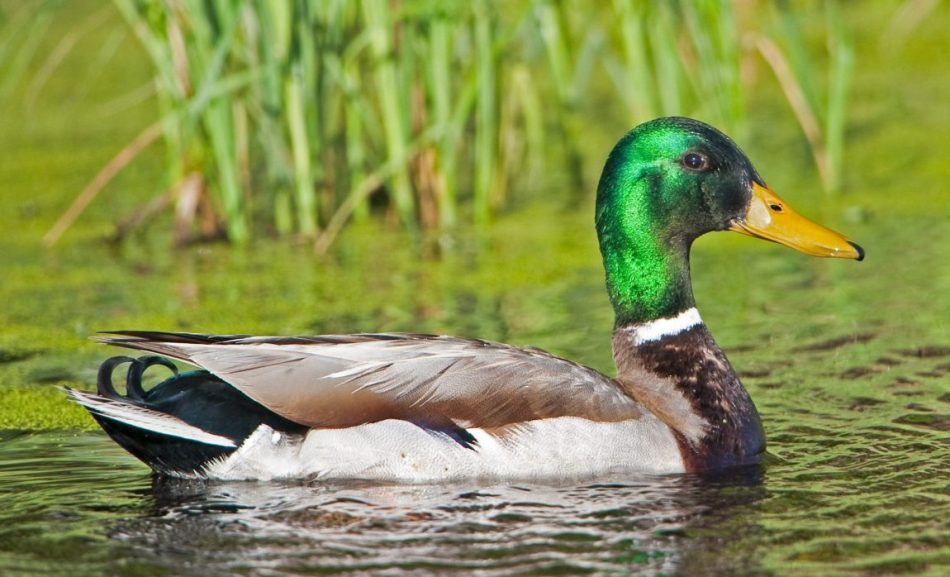
Over the past few months, the Ontario/Nunavut regional centre of the Canadian Wildlife Health Cooperative (CWHC) has been receiving numerous reports of dead waterfowl. After testing samples from around Ontario, including large die-offs in Essex and Wellington county, we can confirm that the culprit in the majority of these events is highly pathogenic avian influenza virus (HPAI). Avian influenza viruses have been present for a long time in wild waterfowl populations 2, in much the same way that the seasonal influenza virus has long been present among human populations. Given this fact, many people wonder why large numbers of dead waterfowl found floating in ponds and rivers in the fall and winter seems to be a recent and reoccurring phenomenon. After all, if avian influenza has been circulating in wild birds for such a long time, why are we only seeing such high levels of mortality now?
The answer to this question comes through deeper study of this virus itself. All viruses contain a genetic code, and mutations within this code can sometimes give rise to new subtypes of a virus. Though avian influenza viruses have been circulating in waterfowl for a long time, the spread of highly pathogenic H5N1 virus clade 2.3.4.4b to North America in 2021 led to the establishment of this new subtype of the virus 8. Highly pathogenic avian influenza H5N1 virus clade 2.3.4.4b is associated with increased mortality relative to the low pathogenic version that has long circulated in North American birds 2. The establishment of this new subtype is the reason for the large die-offs that have become a recurring phenomenon over the past few years. As temperatures get colder and days get shorter, waterfowl begin to group up and fly south for the winter. With highly pathogenic H5N1 now on the landscape, this practice has the unintended consequence of creating ideal conditions for the spread of disease – lots of birds moving around and grouping up together in ponds, rivers, and fields. This likely contributes to the observed seasonality of the large die-off events, which often occur in the Fall and winter months 2.
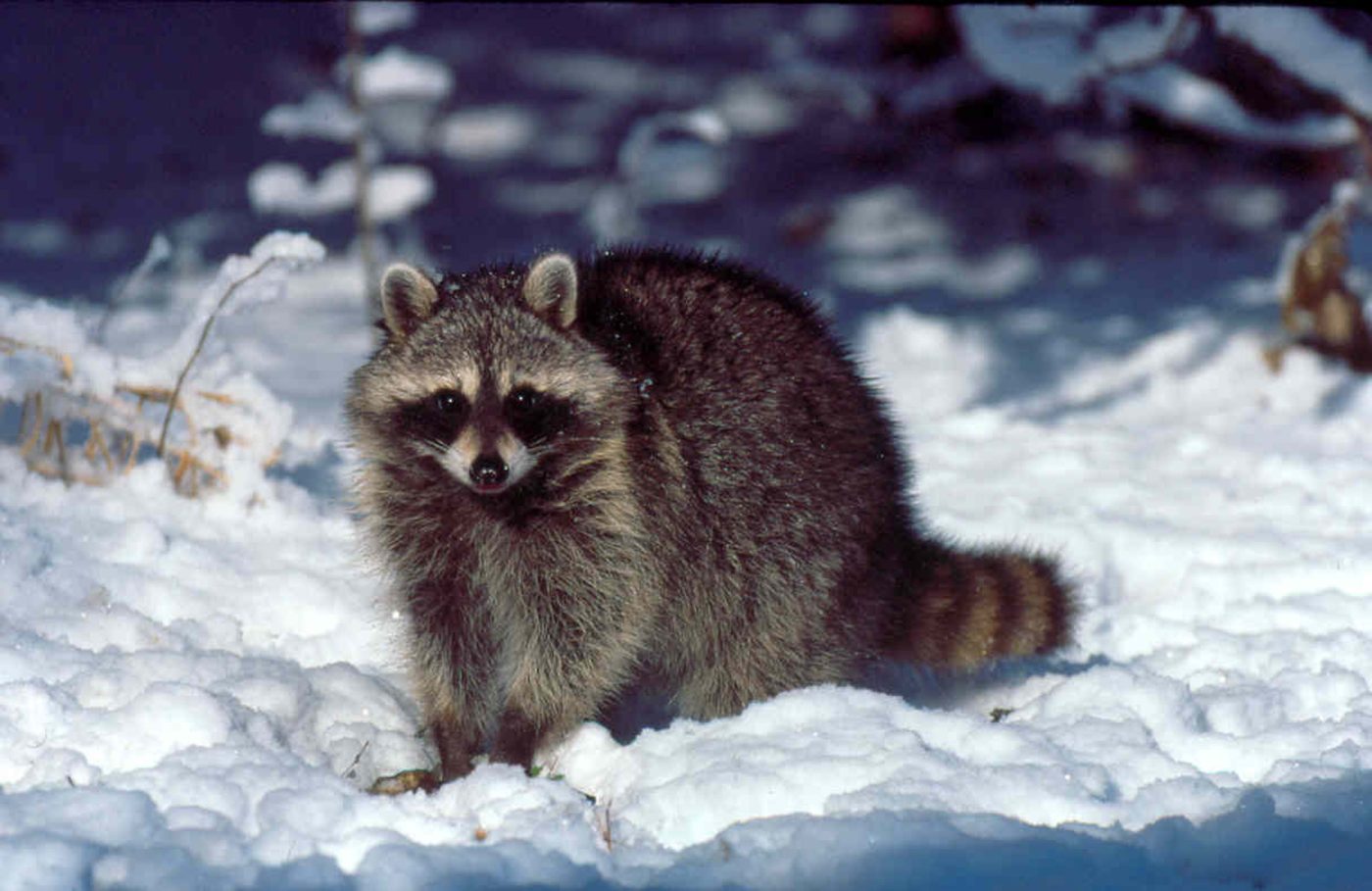 The CWHC has detected HPAI in several species, though most commonly in waterfowl. Scavenging species including turkey vultures, crows, ravens, bald eagles, foxes, and raccoons have also tested positive. Though there have been rare detections elsewhere 11, we have had no songbirds test positive in Ontario. HPAI infections of mammals have largely been limited to scavenging events – species such as foxes or raccoons consuming the carcasses of birds that have died from the virus 10. However, the outbreak among dairy cattle that began last year in the United States broke that trend and represented sustained mammal-to-mammal transmission of the virus 9. Still, the risk to the general public remains low 6. There have been no confirmed human cases of HPAI in North America that have resulted from exposure to wild birds 5; most cases have been traced back to exposure on infected poultry or dairy facilities 3.
However, not all die-off events can be attributed to avian influenza. Although it is the culprit in the majority of bird die-off events this year, samples from a couple die-offs in October in Simcoe county tested negative for avian influenza but positive for type E avian botulism. These detections follow a large-scale outbreak in 2024, during which the CWHC confirmed the disease from samples collected on the coast of Georgian Bay and received reports of over 500 dead birds. Avian botulism is a disease caused by the ingestion of a toxin produced by the bacteria Clostridium botulinum 1. This bacterium is found throughout the sediments of the Great Lakes, and in times of low oxygen produces the deadly toxin 7. This often results in small to large-scale die-offs in the Fall, as dead mussels become small chambers of toxin production 4. The toxin reaches mussel-eating birds when the dead mussels are consumed, and fish-eating birds are affected when they consume the mussel-eating fish who have ingested toxin-containing mussels 12. Diving ducks eat mussels, while grebes and gulls consume fish, so it is not a surprise that these species are common victims of type E botulism.
So, what can be done to keep yourself and your pets safe? If you find a dead wild animal, do not touch it. Please contact the appropriate authority for your region. If you have pets that spend time outside, keep them on a leash and away from any dead wild animals. If your pet has contact with a dead wild animal, please reach out to your veterinarian. If you are a hunter, cook game meat thoroughly and follow safe handling procedures. For more information on how to protect yourself and your pets from avian influenza, please visit the Government of Canada Avian Influenza in Wild Birds webpage; which can be found here. While botulism can affect people, avian botulism outbreaks do not typically pose a risk to human health. Humans usually contract type E botulism through incorrectly prepared canned and smoked foods.
Ultimately, more research is needed to better understand and combat the various diseases that can cause such large-scale die-off events in birds. We are working with a variety of partners to accomplish this goal, but we need your help to do so. You can contribute to this research by contacting the CWHC to report any sick or dead birds you come across. In Ontario and Nunavut, you can make a report online by clicking here or by calling us at 1-866-673-4781.
Prepared by Abby Irwin, Daniel Bayley, and Jenna Matsuba, CWHC Ontario/Nunavut
References
- Espelund, M. & Klaveness, D. (2014). Botulism outbreaks in natural environments – an update. Front Microbiol, 5. https://doi.org/10.3389/fmicb.2014.00287
- Fourment, M., Darling, A. E., & Holmes, E. C. (2017). The impact of migratory flyways on the spread of avian influenza virus in North America. BMC Ecology and Evolution, 17, Article 118. https://doi.org/10.1186/s12862-017-0965-4
- Garg, S., Reinhart, K., Couture, A., Kniss, K., Davis, C. T., Kirby, M. K., Murray, E. L., Zhu, S., Kraushaar, V., Wadford, D. A., Drehoff, C., Kohnen, A., Owen, M., Morse, J., Eckel, S., Goswitz, J., Turabelidze, G., Krager, S., Unutzer, A., … Olsen, S. J. (2025). Highly pathogenic avian influenza A(H5N1) virus infections in humans. New England Journal of Medicine. https://doi.org/10.1056/NEJMoa2414610
- Getchell, G. & Bowser P. R. (2006). Ecology of Type E Botulism Within Dreissenid Mussel Beds. Aquatic Invaders, 17, Article 2. Ecology of type E botulism within dreissenid mussel beds
- Government of Canada. (2024). Avian influenza in wild birds. https://www.canada.ca/en/environment-climate-change/services/migratory-game-bird-hunting/avian-influenza-wild-birds.html
- Government of Canada. (2025). Avian influenza A(H5N1): Spread, prevention and risks. https://www.canada.ca/en/public-health/services/diseases/avian-influenza-h5n1/prevention-risks.html
- Hannett, G. E., Stone, W. B., Davis, S. W., & Wroblewski, D. (2010). Biodiversity of Clostridium botulinum Type E Associated with a Large Outbreak of Botulism in Wildlife from Lake Erie and Lake Ontario. Appl Environ Microbiol, 77, Article 3. https://pmc.ncbi.nlm.nih.gov/articles/PMC3028746/
- Meade, P. S., Bandawane, P., Bushfield, K., Hoxie, I., Azcona, K. R., Burgos, D., Choudhury, S., Diaby, A., Diallo, M., Gaynor, K., Huang, A., Kante, K., Khan, S. N., Kim, W., Ajayi, P. K., Roubidoux, E., Nelson, S., McMahon, R., Albrecht, R. A., Krammer, F., & Marizzi, C. (2024). Detection of clade 2.3.4.4b highly pathogenic H5N1 influenza virus in New York City. Journal of Virology. https://doi.org/10.1128/jvi.00626-24
- Mostafa, A., Naguib, M. M., Nogales, A., Barre, R. S., Stewart, J. P., García-Sastre, A., & Martinez-Sobrido, L. (2024). Avian influenza A (H5N1) virus in dairy cattle: origin, evolution, and cross-species transmission. mBio, 15, Article 12. https://doi.org/10.1128/mbio.02542-24
- Plaza, P. I., Gamarra-Toledo, V., Euguí, J. R., & Lambertucci, S. A. (2024). Recent changes in patterns of mammal infection with highly pathogenic avian influenza A(H5N1) virus worldwide. Emerging Infectious Diseases. https://pmc.ncbi.nlm.nih.gov/articles/PMC10902543/
- Ringenberg, J. M., Weir, K., Humberg, L., Voglewede, C., Oswald, M., Root, J. J., Dilione, K., Casey, E., Milleson, M., Linder, T., & Lenoch, J. (2024). Prevalence of avian influenza virus in atypical wild bird host groups during an outbreak of highly pathogenic strain EA/AM H5N1. Transboundary and Emerging Diseases. https://doi.org/10.1128/mbio.02542-24
- Yule, A. M., Barker, I. K., Austin, J. W., & Moccia, R. D. (2006). Toxicity of Clostridium botulinum type E neurotoxin to Great Lakes fish: Implications for avian botulism. Journal of Wildlife Diseases, 42, Article 3. https://doi.org/10.7589/0090-3558-42.3.479