

Rats are a public health issue, but we are not monitoring them like one
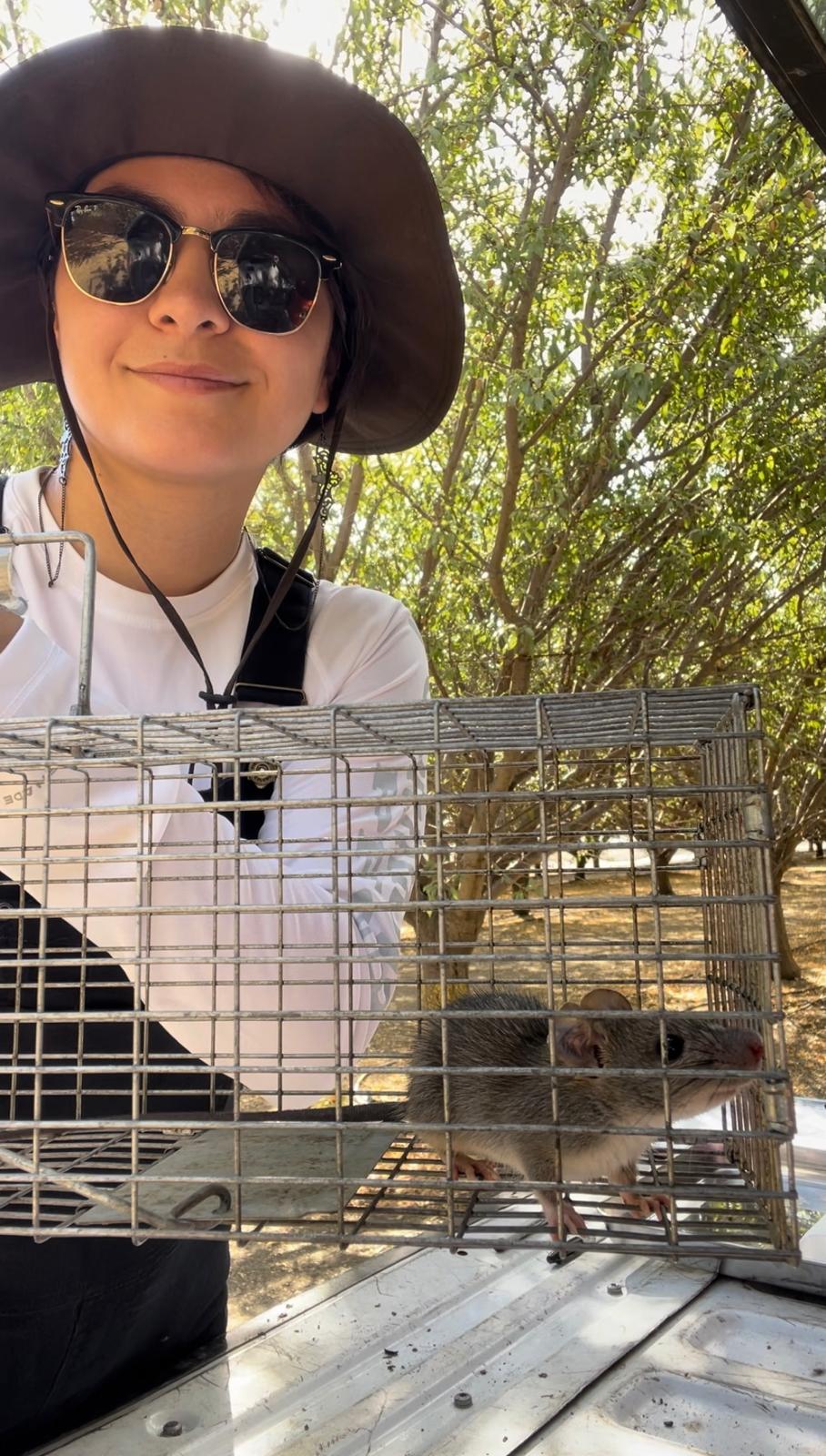 Public health has long understood that you cannot manage what you do not measure. Before a doctor prescribes medication for diabetes, they take a baseline reading. After treatment, they measure again. This before-and-after approach doesn’t just track progress; it reveals whether the intervention itself has been effective.
Urban rat infestations can also impact public health. They can carry a range of zoonotic pathogens and parasites that can infect people and pets, including leptospirosis, hantavirus, and typhus among others. They also damage infrastructure, contaminate food stores, and their presence takes a measurable toll on the mental health of people living in contact with them. And while cities are seeking to manage them – measuring infestations remains a real challenge and hinders effective response.
Globally, we spend an estimated $500 million annually on rat control. Given this substantial commitment, you might be surprised to learn that it is rarely paired with the long-term monitoring needed to know whether these efforts are actually working. This lack of monitoring makes it impossible to know if rat populations are going up, down, or staying the same, and whether our investments are having their intended impact.
Why we need to measure rats, and why it is difficult
Understanding rat populations – their numbers and where they are – helps cities allocate resources where they are needed most, compare intervention strategies, identify hotspots before problems escalate, and hold programs accountable for results. But measuring rats is inherently challenging. They are secretive and highly adaptable, moving through sewers, crawlspaces, alleyways, and other spaces that are difficult for humans to access. Even in accessible areas, most monitoring tools still require rats to come to them, and rats are famously “neophobic” which means they avoid new items in their environment. Urban environments add further complexity: dense infrastructure, abundant hiding places, increased human activity, and a smorgasbord of food sources. There is no single, universally accepted method for measuring rat populations in cities, and each available tool comes with its limitations.
There are many ways to monitor rats, but every method has tradeoffs
Cities have many options for monitoring rats, but none are perfect. Low-cost passive tools such as tracking tunnels, track plates, and chew cards are affordable and scalable, capturing footprints or bite marks on simple surfaces to determine relative rat activity in an area. The downside: rain and moisture can obscure tracks, in high-activity areas it can be difficult to identify prints, and chew cards may be shredded beyond recognition. Public complaint data like 311 phone systems generate large datasets, but complaints are shaped by reporting bias and may cluster in civically engaged neighborhoods rather than where rats are most abundant. Camera traps may be the most reliable method for detecting presence, especially at low densities, but each unit can be costly and sorting through footage is labor-intensive. Remote sensing through Internet of Things (IoT) sensors and infrared detection enables real-time monitoring with less manual effort, though limitations around cost and detection accuracy remain. Capture-mark-recapture is the “gold standard” for estimating abundance, but it is too labor-intensive for large-scale or continuous monitoring.
Why measuring rats helps rats and other wildlife
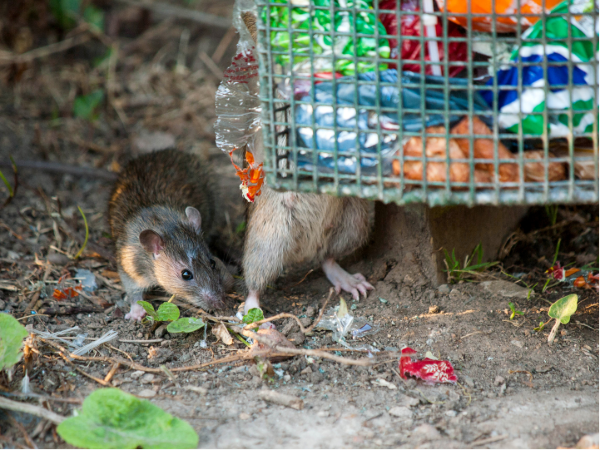 Better management does not only benefit people. It protects the broader ecosystem. A study in Auckland, New Zealand found that more frequent rat control in residential backyards was associated with higher native and endemic bird species richness and abundance, and that daily nest survival for birds improved when rat detection rates decreased. Globally, rats are linked to the extinction of roughly 60 island-dwelling vertebrate species through predation on eggs and live young. While most of this research has focused on islands, where native species are especially vulnerable, these dynamics are also likely at play in cities. Whether on islands or in urban neighborhoods, rat surveillance and management is crucial for protecting biodiversity.
Rat surveillance is public health infrastructure
Rats are sentinels for their environment. Their presence reflects the conditions that drive disease transmission: inadequate waste management, poor sanitation, overcrowded housing, and the pressures of climate change. This is why surveillance matters. When we monitor rats, we gain insight into the broader urban systems that shape human and wildlife health. And because communities with the fewest resources often bear the greatest burden of rodent infestations, systemic surveillance becomes a tool for equity, revealing where interventions are most needed and whether they are making a difference. It empowers residents, pest managers, and public health teams who need better data to act and hold rodent management programs accountable.
The lesson from public health is clear: measure before and after you intervene. A city that treats rat surveillance as infrastructure will improve rat management outcomes, protect human and animal health, and build the evidence base that urban public health has been missing.
Our current research is working to build that evidence base. We are investigating how sensor-based and indirect monitoring tools can be optimized and validated to accurately quantify urban rat infestations, and how cities can use these measures to assess whether their interventions are actually working. Because no single tool performs equally well everywhere, we are focused on identifying the monitoring method that best fits our municipality’s local context and can realistically be deployed at scale. The goal is to give cities the evidence they need to integrate rat surveillance into their public health infrastructure.
What a better future could look like
 A better future starts with treating rat monitoring the way cities already treat other routine municipal services. Transit systems track how many people ride. Schools monitor how many students enroll. Water utilities measure the quality of the water they deliver. Rat management belongs in the same category: a regular, ongoing function of city infrastructure, not a response that only begins when complaints pile up. In this future, cities maintain data dashboards showing real-time trends. Interventions are deployed based on evidence, not only complaints. Goals are tailored to local priorities: fewer rats, less rat-associated harms, or both. And because cities measure rats before and after they intervene, they can address problems before they escalate. When rodent monitoring becomes part of the same operational rhythm as the services residents already depend on, cities can shift from reactive to proactive management.
By Gabriela Guzman
References
- Balls, C. (2019). Understanding the distribution of introduced mammalian predators in an urban environment using monitoring tools and community trapping. MSc Thesis. Victoria University of Wellington.
- Bosarge, M. A., & Stapp, P. (2024). Behavior and activity of commensal roof rats around bait stations and tracking tunnels in southern California: Insights to improve management. MSc Thesis. University of California, Fullerton. https://doi.org/10.5281/zenodo.15080546
- Byers, K. A., Lee, M. J., Bidulka, J. J., Patrick, D. M., & Himsworth, C. G. (2019). Rat in a Cage: Trappability of Urban Norway Rats (Rattus norvegicus). Frontiers in Ecology and Evolution, 7(68). https://doi.org/10.3389/fevo.2019.00068
- Diagne, C., Ballesteros-Mejia, L., Cuthbert, R. N., Bodey, T. W., Fantle-Lepczyk, J., Angulo, E., Bang, A., Dobigny, G., & Courchamp, F. (2023). Economic costs of invasive rodents worldwide: The tip of the iceberg. PeerJ, 11, e14935. https://doi.org/10.7717/peerj.14935
- Gerolemou, R. V., Russell, J. C., & Stanley, M. C. (2024). Outcomes of community-led urban rat control on avifauna. Biological Invasions, 26(11), 3639–3655. https://doi.org/10.1007/s10530-024-03401-7
- Himsworth, C. G., Parsons, K. L., Jardine, C., & Patrick, D. M. (2013). Rats, cities, people, and pathogens: A systematic review and narrative synthesis of literature regarding the ecology of rat-associated zoonoses in urban centers. Vector-Borne and Zoonotic Diseases, 13(6), 349–359. https://doi.org/10.1089/vbz.2012.1195
- Lam, R., Byers, K. A., & Himsworth, C. G. (2018). Beyond zoonosis: The mental health impacts of rat exposure on inner-city residents. J Environ Health, 81, 8-13.
- Lee, M. J., Byers, K. A., Stephen, C., Patrick, D. M., Corrigan, R., Iwasawa, S., & Himsworth, C. G. (2022). Reconsidering the “War on Rats”: What we know from over a century of research into municipal rat management. Frontiers in Ecology and Evolution, 10, 813600. https://doi.org/10.3389/fevo.2022.813600
- Murray, M. H., Fyffe, R., Fidino, M., Byers, K. A., Ríos, M. J., Mulligan, M. P., & Magle, S. B. (2018). Public complaints reflect rat relative abundance across diverse urban neighborhoods. Frontiers in Ecology and Evolution, 6, 189. https://doi.org/10.3389/fevo.2018.00189
- Towns, D. R., Atkinson, I. A. E., & Daugherty, C. H. (2006). Have the harmful effects of introduced rats on islands been exaggerated? Biological Invasions, 8(4), 863–891. https://doi.org/10.1007/s10530-005-0421-z